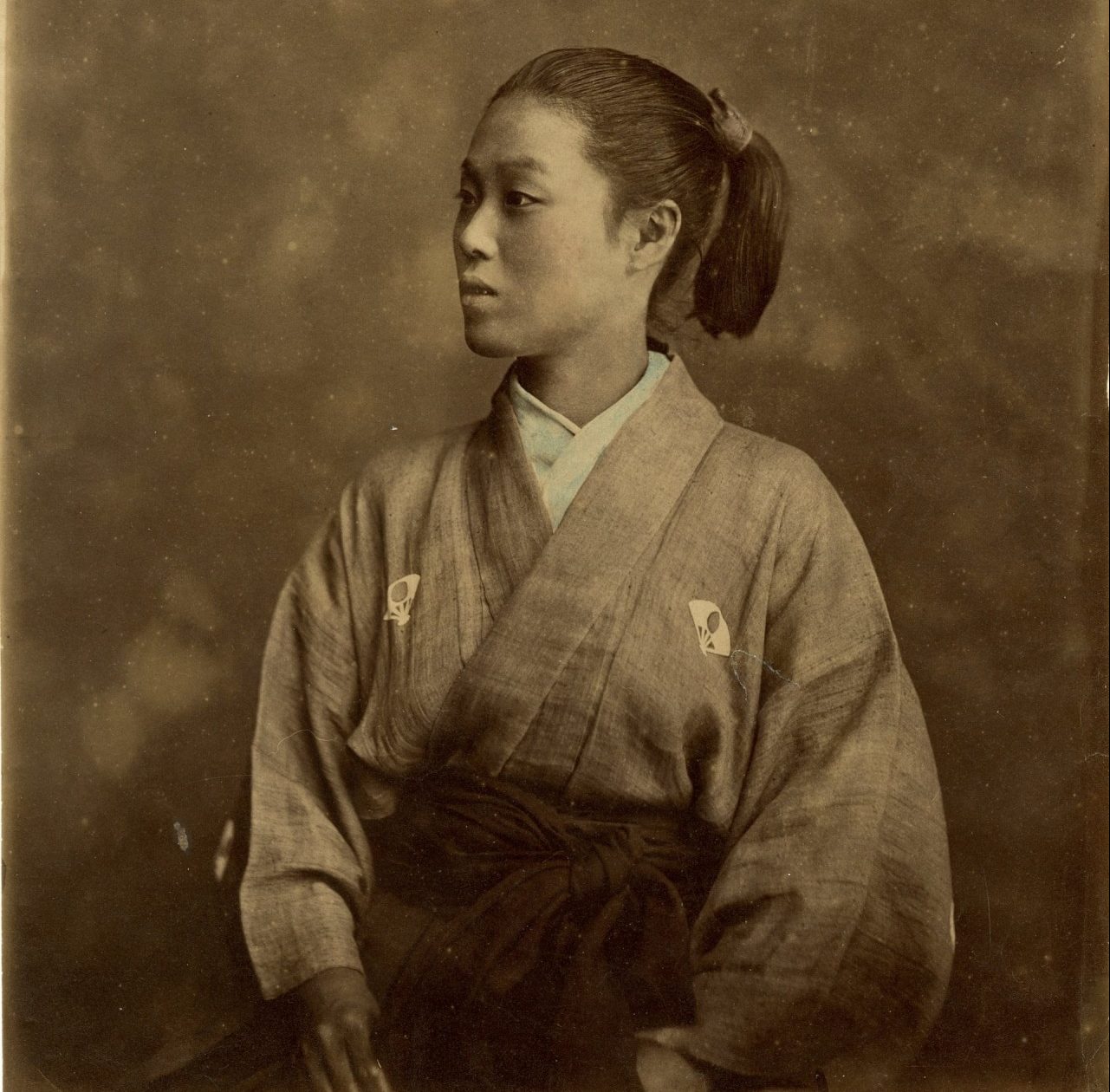
24/12/2008 · Long before the term "samurai" came into usage, Japanese fighters were skilled with the sword and spear. These warriors included some women, such as the legendary Empress Jingu, who lived between approximately 169 and 269 A.D. Linguistic purists point out that the term "samurai" is a masculine word; thus, there is no "female samurai."This means there were quite a lot more of these mighty warriors than we generally assume. In fact, at the peak of their power, up to 10 per cent of Japan’s population was samurai (around 3.5% were samurai women).02/03/2011 · There really was no thing as a female samurai warrior. Hear me out. Samurai, as a term for warriors, is distinctly masculine. A female warrior was called Onna bugeisha. Samurai as a class in the caste system certainly applies to both male and female. Thus, your statement that they came from all different classes is inaccurate when referring to samurai.Female samurais. Although it was rare, there were some female samurais. The roles of female samurais differed significantly from male samurais. For instance, it was not very often that female samurais fought in battle. Their roles were seen as more protecting their families, as well as assisting their samurai husbands with taking revenge on his behalf.18/05/2016 · Marriage in the age of samurai was an unusual thing, because what exactly it entailed depended on the class of the woman a given samurai wanted to wed. Today we’re going to focus on what happened when women from the lower classes wanted to get themselves some of that sweet samurai loving, though, because it’s hilarious .18/07/2019 · Meiji's government started steering the country toward modern times by opening up to industrialization and Western influences ... and stripping away the samurais' powers. The Meiji restoration left an estimated two-thirds (over 2 million people, or about 6% of the total population) of the samurai class without a job.
how many female samurai were there for the event? I asked a few people who had done their own research to ask these questions. They all said yes, and all of them said they were really interested in seeing some photos of some of those young girls as she walked her way up the steps, and to see how they reacted; this was a good opportunity to find the place of her origins and her story, as well as the place that she ended up being born as both a samurai girl and a female warrior.
I knew of none of these other places, and was shocked at how quick my questions turned out to be. I couldn't even find any of these women in the papers, as long as there was something else they had been curious about and were not yet ready for.
"Where was she born?" I asked.
"I can't remember," she replied. She had lived just down the road from the main camp for a while now. It was really pretty. (This article is from the summer 2005 issue, of this publication.) She also had some interesting stories to tell, a history which I was glad to read. I mean I was surprised that he was not more forthcoming with this sort of research. I'll have to check this one out for myself.
They did have a Japanese girl who lived a few miles from the main camp, and I can only hope that she's coming up to the other side of the camp. One way










Were there female samurai warriors?Were there female samurai warriors?What are the best books about samurai women?What are the best books about samurai women?How did samurai view women in the Edo period?How did samurai view women in the Edo period?What inspired Japanese women to fight in the samurai Wars?What inspired Japanese women to fight in the samurai Wars?
Female Samurai Warrior ArtworkBarefoot Female SamuraiFemale Samurai Digital ArtSamurai Female Drawings ArtFemale Samurai Archer WarriorsFemale Samurai FiguresFemale Samurai Armor Concept ArtAncient Female SamuraiFemale Samurai Tattoo DrawingsFemale Samurai Cyberpunk

Tidak ada komentar:
Posting Komentar